
Homemade Ferrero Rocher
Two ways to use 'Gianduja'


🎉 Welcome to my newsletter, The Boy Who Bakes, a subscriber-supported newsletter dedicated to all things baked. For more bonus posts, filled with exclusive recipes just like this one, you can become a paid subscriber for the weekly newsletter, Second Helpings. It costs just £5 a month and, as well as the weekly recipes, it also unlocks access to the full archive of past recipes. To subscribe to either the paid or free newsletter, click the link below.🎉
Sometimes recreating a mass-manufactured product is fun, sometimes it ends up tasting better than expected, and sometimes it’s close to impossible to replicate. When I decided to recreate the famous Ferrero Rocher, all three possibilities turned out to be true. Figuring out how to make a homemade version was a lot of fun, and I ended up making a few different variations to figure out how to make this confection at home. The result was also incredibly tasty, so much more depth than the commercial variety and made with much better quality chocolate. It was also undeniably tricky. Because I didn’t want to just give you a recipe that would be on the harder side, I decided to also make the ‘green triangle’ form Quality Street. I chose that particular chocolate because the filling of both chocolates is very similar. So, if you want the flavour of a Ferrero Rocher but want something decidedly easier to make, the ‘green triangle’ is the recipe for you.
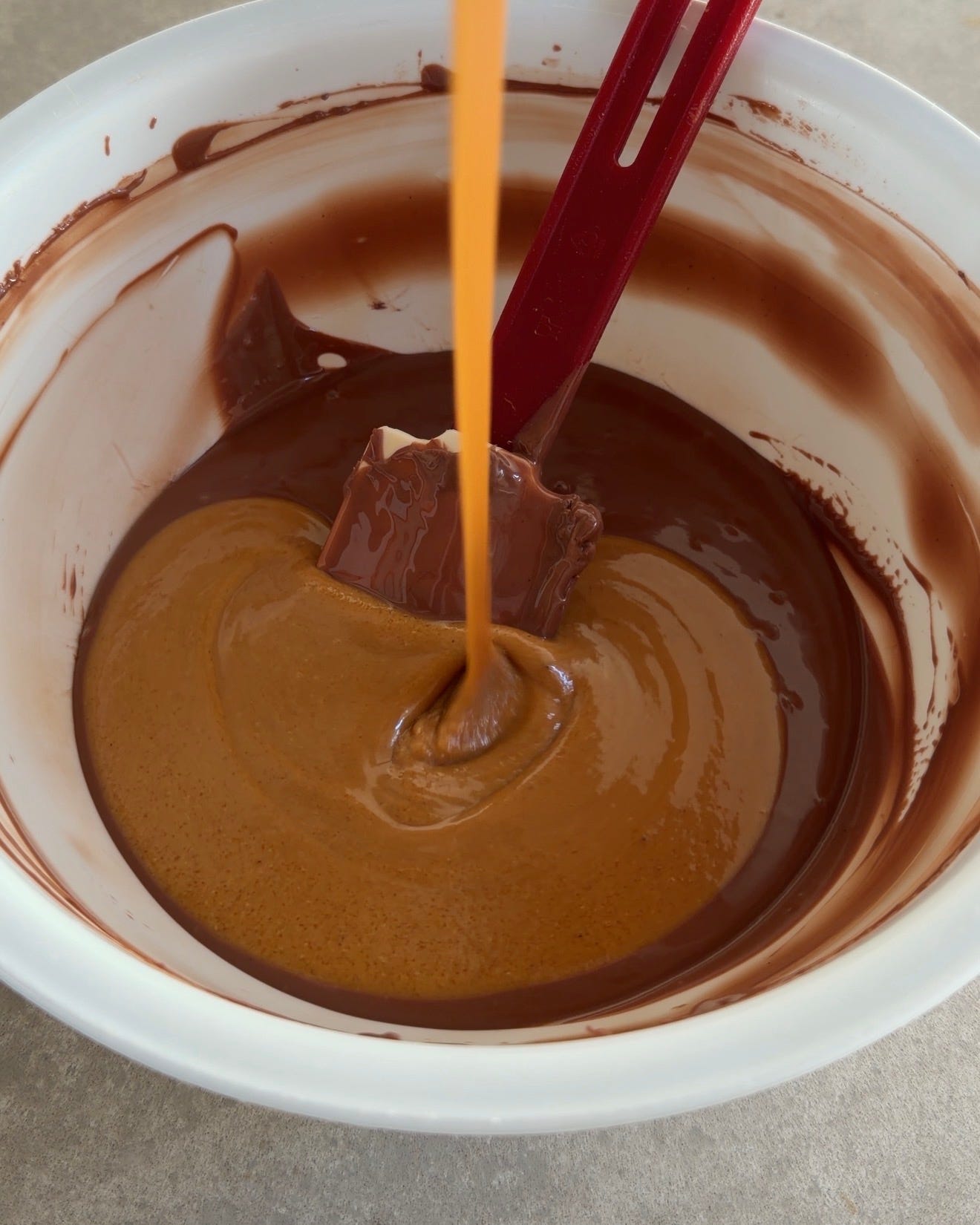
After lots of experimenting, I decided to make the Ferrero Rocher from Gianduja, that incredible Italian confection made from a mix of milk chocolate and hazelnut praline. The centre of a Ferrero Rocher is simply a whole hazelnut and Nutella, which works because of commercial manufacturing and the use of wafer shells, which becomes a very messy endeavour if we try to replicate it at home. To make these chocolates, I needed to come up with an alternative method. Gianduja is firmer than Nutella, so it can be shaped into balls much more easily, and it has the added benefit of being more intense in flavour, compared to Nutella, and is also made without all the commercial ingredients such as palm oil found in the spread. I used some silicon moulds to form the centres of the chocolate, but what about the wafer?
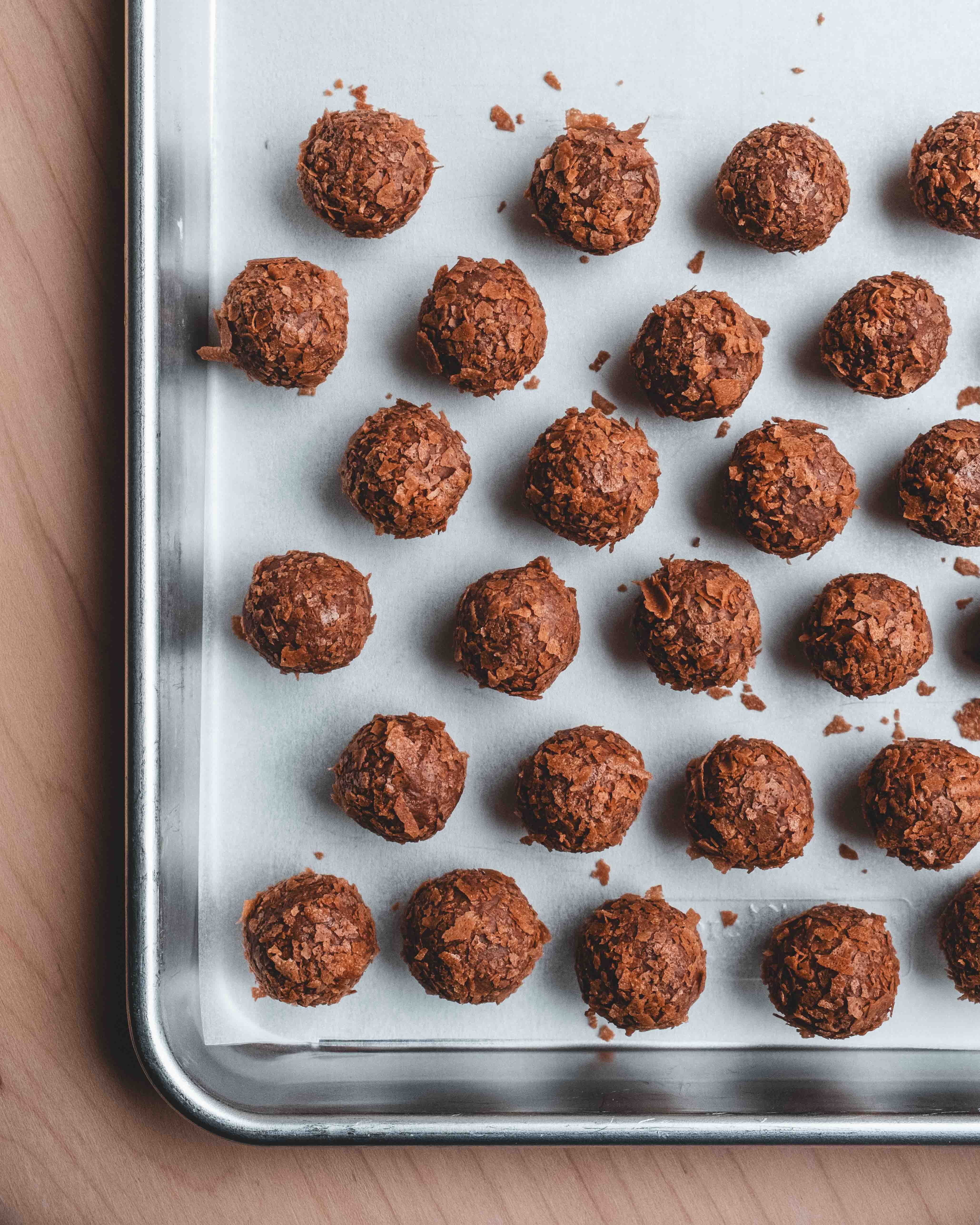
If you look into how these chocolates are made, you find that two demi-sphere wafer cups are filled with Nutella (and one whole hazelnut), sandwiched together and then coated in chocolate with chopped up hazelnuts mixed through. To get a wafer-like texture into my version, I chose to use feuilletine. This is a crushed-up wafer from France, which is incredibly popular in patisserie. When mixed into a fat-based product, such as chocolate or praline paste, it adds a wonderful crisp element. If you try to buy feuilletine online, you’ll sadly find it is only sold in huge boxes for commercial use. Thankfully, you simply need to know the right word to search. Feuilletine is the name of the crushed-up product found in professional kitchens, but this product is also available in every French supermarket under a different name and is therefore very easy to find online. The ‘un-crushed’ version of feuilletine is the French cookie/biscuit known as ‘Crepe Dentelle’. The cookies are light and buttery, and when crushed up, are completely identical to the commercial ingredient. To get the wafer texture to my homemade Ferrero Rocher, I simply rolled the balls of gianduja into the crushed up cookie before coating them in a layer of chocolate and chopped hazelnut.
The resulting chocolates are absolutely fabulous, and whilst they are undeniably hard work, with a not insignificant time requirement, they are the perfect edible gift, who wouldn’t want a batch of these under their Christmas tree this year?
And as I said earlier, if that all seems like too much work, you can also simply make the green triangle, a more pared-back take on similar flavours. In this recipe, the Gianduja is simply poured into a small baking tray to make a slab. Once set, this is then cut into triangles and coated in tempered chocolate.
Keep reading with a 7-day free trial
Subscribe to The Boy Who Bakes to keep reading this post and get 7 days of free access to the full post archives.