
Four Tasty Things - Fig Leaf
Including my favourite fig leaf ice cream

🎉 Welcome to my newsletter, The Boy Who Bakes, a subscriber-supported newsletter dedicated to all things baked. For more bonus posts, filled with exclusive recipes just like this one, you can become a paid subscriber for the weekly newsletter, Second Helpings. It costs just £5 a month and, as well as the weekly recipes, it also unlocks access to the full archive of past recipes. To subscribe to either the paid or free newsletter, click the link below.🎉
I am far from a natural forager, but there are a couple ingredients I will actively go out hunting for. Thankfully, each of these are incredibly easy to find. You have wild garlic and elderflower, and today's topic - fig leaf.
Have you ever tried anything made with fig leaf? Tasting of coconut, vanilla, and bitter almond, it also has this herbaceous undertone that makes for a deliciously complex flavour. If I said it tasted green, would that make sense? In my head it tastes like green coconut, not young green coconut but a coconut that tastes of green. Does that make any sense at all? Anyway, it is rather special, and it’s all too easy to become obsessed with. This week, I've enjoyed fig leaf matchas, fig leaf margaritas, and fig leaf ice cream, and later today I am planning on trying it on an iced coffee. I told you, obsessed! It’s also a natural choice when it comes to baking, and, as someone that absolutely loves coconut, it is clearly a personal favourite. But it is also a favourite of pastry chefs; you’ll see it make frequent appearances on restaurant menus. It infuses brilliantly into dairy, so it is often used to make panna cottas, ice creams, and all manner of mousses - you can add an interesting dimension to basically any dessert very simply. There are, however, quite a few ways to use this delicious leaf. So, today's newsletter is four tasty things using fig leaf, including a very special ice cream.
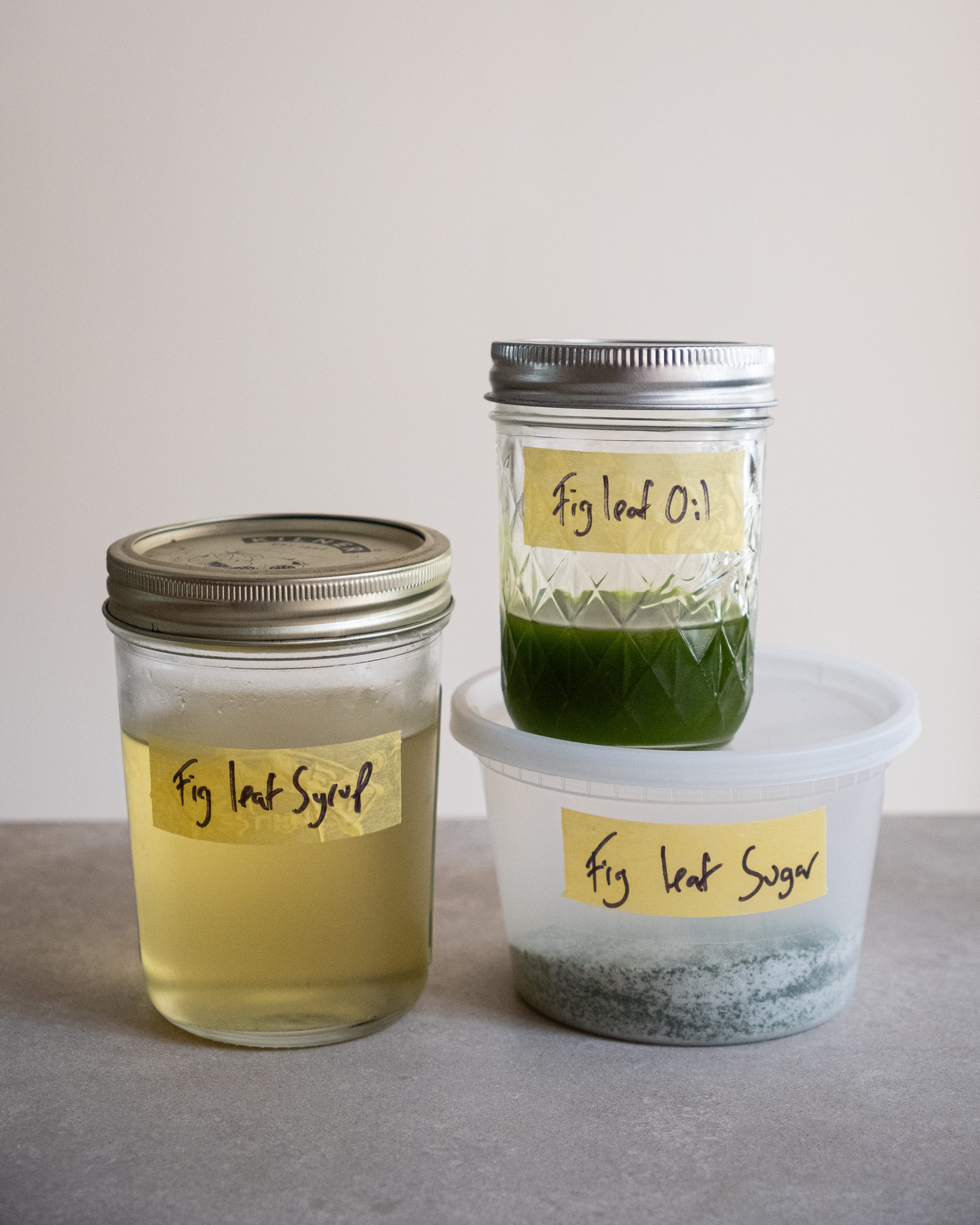
Over in today's issue of Second Helpings, for paid subscribers, I have a recipe for beautiful cherry and fig leaf tarts. Made with sweet pastry, they are filled with a fig leaf frangipane topped with cherries and whipped cream. To finish, the tarts are finished with a drizzle of fig leaf oil. They’re SO good! A very special dessert for the summer.
If, after reading this newsletter, you decide you want to make something with fig leaves, where can you find them? If you’re a bit like me, not a naturally green-fingered fellow, then it is sad news because, unlike wild garlic, it’s something you absolutely have to hunt down yourself; not even greengrocers sell it (edit: after writing this, someone told me they’d seen it at a farmers market). Thankfully, it is quite easy to find and to harvest. Fig trees have very distinct-looking leaves, and when you get close, the tree also has a subtle scent. After moving house, I didn’t have a go-to tree anymore, so I asked online and was given a ton of local recommendations; it turns out fig trees are everywhere! If you don’t know where there is one, one of your friends or neighbours will do; just ask.
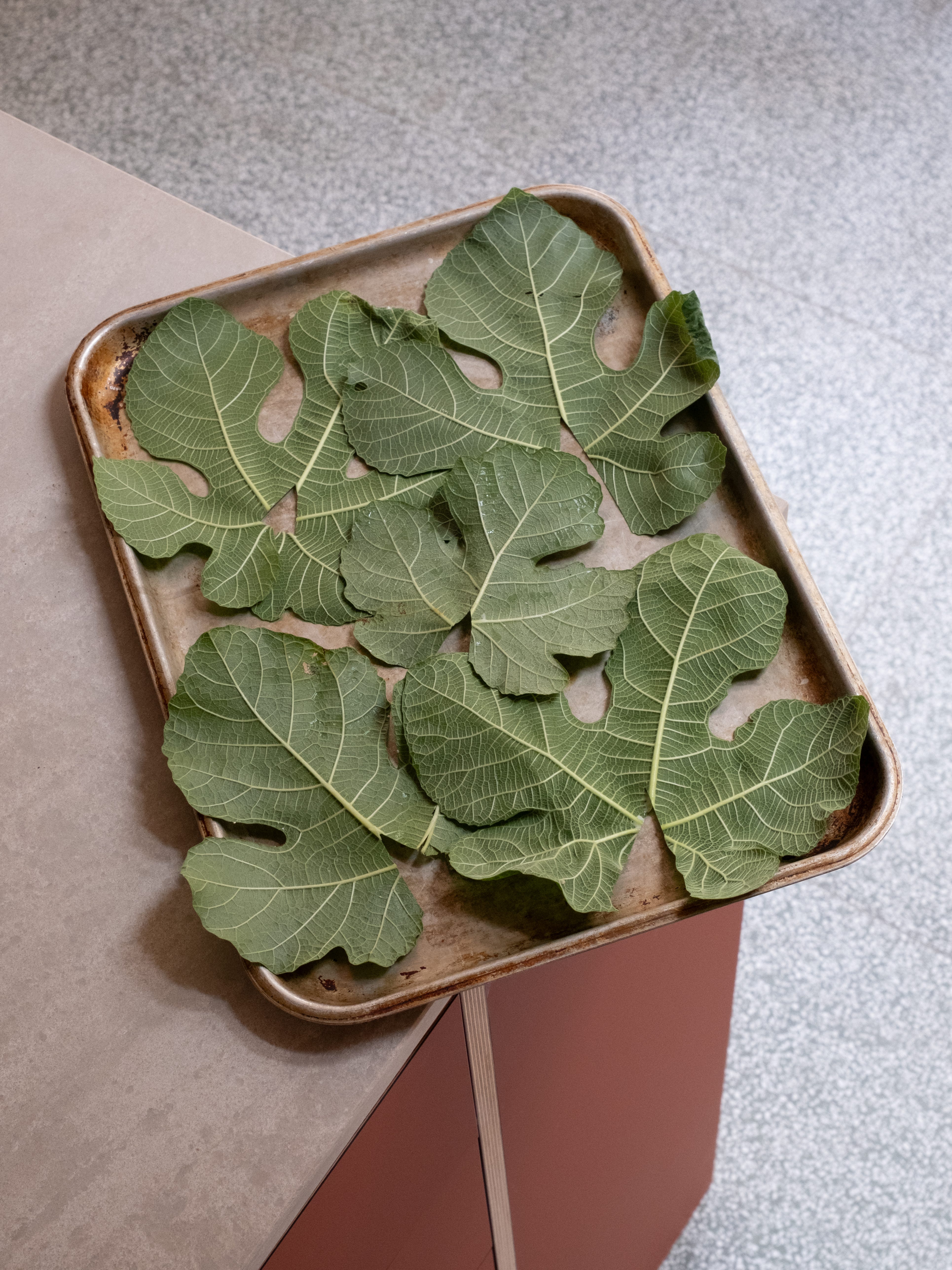
Do you know a neighbour with a tree? I would wager they’d happily let you pluck a few leaves from their tree, especially if you return the favour with delicious baked goods. Just know the rules around foraging, because there is a question of legality. As I understand it (and please don’t take my word as gospel), you can forage foliage, fruit, fungi, and flowers from anywhere you have legal access to, so long as it is only for personal consumption. This means if the tree is on private property, you must seek permission before snipping a few leaves. If the tree is on public land, have at it.
And one last bit of business before we get to the tasty things: be careful when collecting the fig leaves. When you cut the leaves from the stem, a white sap can be seen. This liquid can be quite an irritant if it gets on your skin, so the best advice would be to wear gloves and always wash the leaves before using them.
Fig Leaf Oil
This is a classic method to get the flavour of the leaves, simply blitzing them together to make an infused oil. Made in much the same manner that a restaurant might make a basil oil, the leaves are blanched and then blended together with oil before being strained to remove any solids from the leaves. The result is a radioactively bright oil that has a beautiful flavour, with a hint of sweetness. It can be used when plating a dessert, when making an oil-based cake, or, my personal favourite, as an ice cream topping. I have seen people use different ratios of fig leaf to oil, anything from 1 part fig leaf to 3 parts oil to 1 part fig leaf to 5 parts oil - personally I like the strength of a 1:3 oil.
50g fig leaves
150ml grapeseed oil
To make the oil, simply add the leaves to a pan of boiling water and cook for about a minute or until wilted. Lift from the pan and transfer the leaves to a bowl of ice water. This stops the leaves from cooking any further and retains their vibrant green colour. It also means the leaves will break down in the blender much more readily. Lift the leaves from the water and squeeze to remove as much water as possible. Add the leaves and the oil to a blender and process for about 2-4 minutes or until the mixture turns a deep green colour and is almost a smooth liquid. Pour the oil mixture through a fine mesh sieve, which is lined with either some kitchen roll, a coffee filter, or a muslin. Allow as much of the oil to drain out as possible, pressing on the back of the leftover solids to extract as much of the oil as possible.
Pour into a jar and store in the fridge for up to two weeks. The flavour and colour will dampen as time goes on, so I like to make it in relatively small batches so it's always nice and vibrant when I come to use it.
Oil Choice
You use just about any oil you fancy to make this infused oil, but generally I would use something neutral, like a grapeseed oil, or go the opposite route and use a really good olive oil. My choice would be dependent on what I intended to use the oil for. Primarily, I like using the oil in sweet applications, so I prefer to use a neutral oil so there is no competing flavour, but it works wonderfully either way.
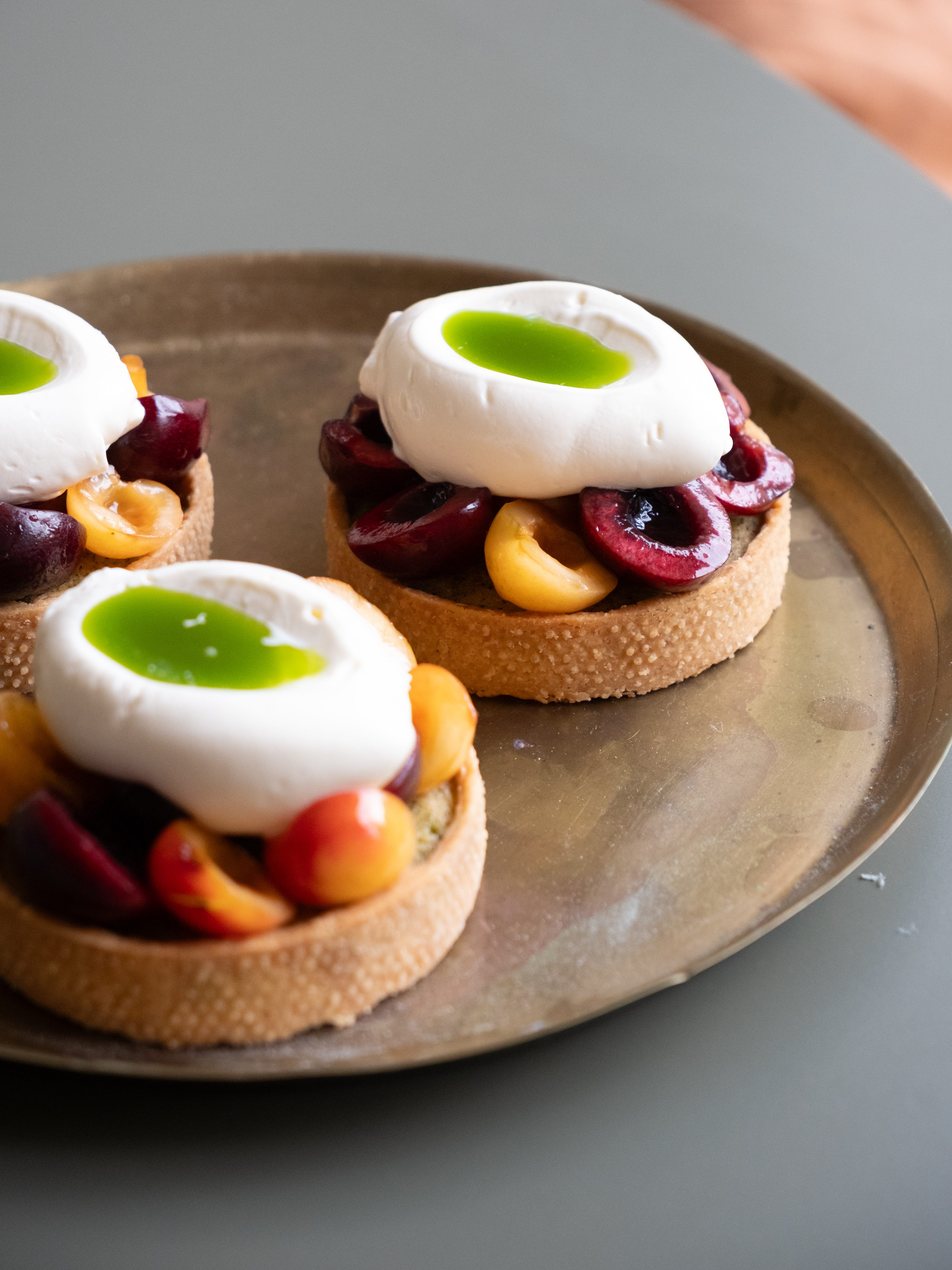
Fig Leaf Sugar
This is a particularly useful technique when you want to bake with fig leaf. Almost like making a vanilla sugar, the leaves are going to be mixed with sugar, which can then be used to make all manner of recipes. In Second Helpings this week I have a recipe for fig leaf and cherry tarts, and this sugar is used to make a fig leaf frangipane, which carries the flavour of the fig leaf wonderfully. I once heard of a restaurant using fig leaf powder to make a chocolate chip cookie, and I am dying to try this out! Below is a very rough ratio, but it will vary depending on how big your fig leaves are. Once you have ground the leaves into a powder, you want to use about 100g of sugar for every tablespoon of fig leaf powder.
4 fig leaves
200g caster sugar
Wash the leaves and pat them dry with some kitchen roll. Spread the fig leaves onto a baking tray so that they don’t overlap too much. Place into an oven that has been preheated to 150ºC and bake the leaves for about 10-12 minutes. The aim is for the leaves to be dry and brittle but without having taken on any colour. A good indicator that the leaves are almost ready is when the edges of the leaves have curled up. Remove from the oven and set aside briefly until cooled.
Break the leaves up into pieces and place them into a food processor. Pulse until the leaves are broken down into a fine powder. Sieve this powder to remove any stringy pieces and then stir through the sugar. Store in a sealed jar.
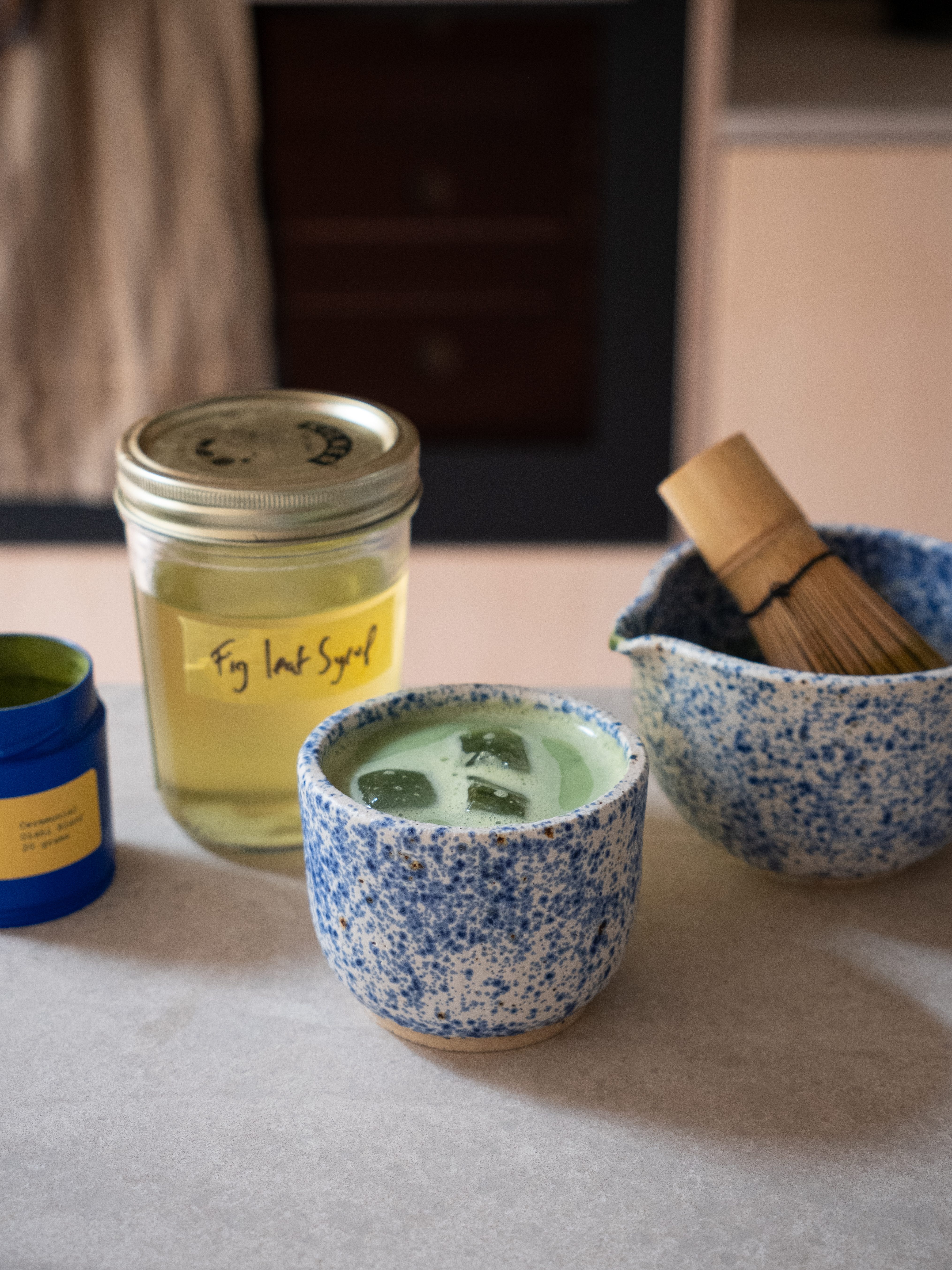
Fig Leaf Syrup
Another brilliant baking technique for fig leaves, this syrup is on the more floral and subtle side. No more complicated than making any other simple syrup, the finished product can be used to moisten cake layers and in sorbets as well as in cocktails when a simple syrup is called for. This week I have been using it as a way to flavour and sweeten my iced matcha, which was a brilliant pairing.
40g fig leaves, washed and roughly chopped
200g caster sugar
300ml water
To make the syrup, add everything to a saucepan and place over high heat. Bring the mixture to a boil, then reduce and cook at a simmer for 5 minutes. Remove the pan from the heat and leave to infuse for an hour. Pass the syrup through a sieve to remove the leaves. Store in a sealed jar in the fridge for a couple weeks.
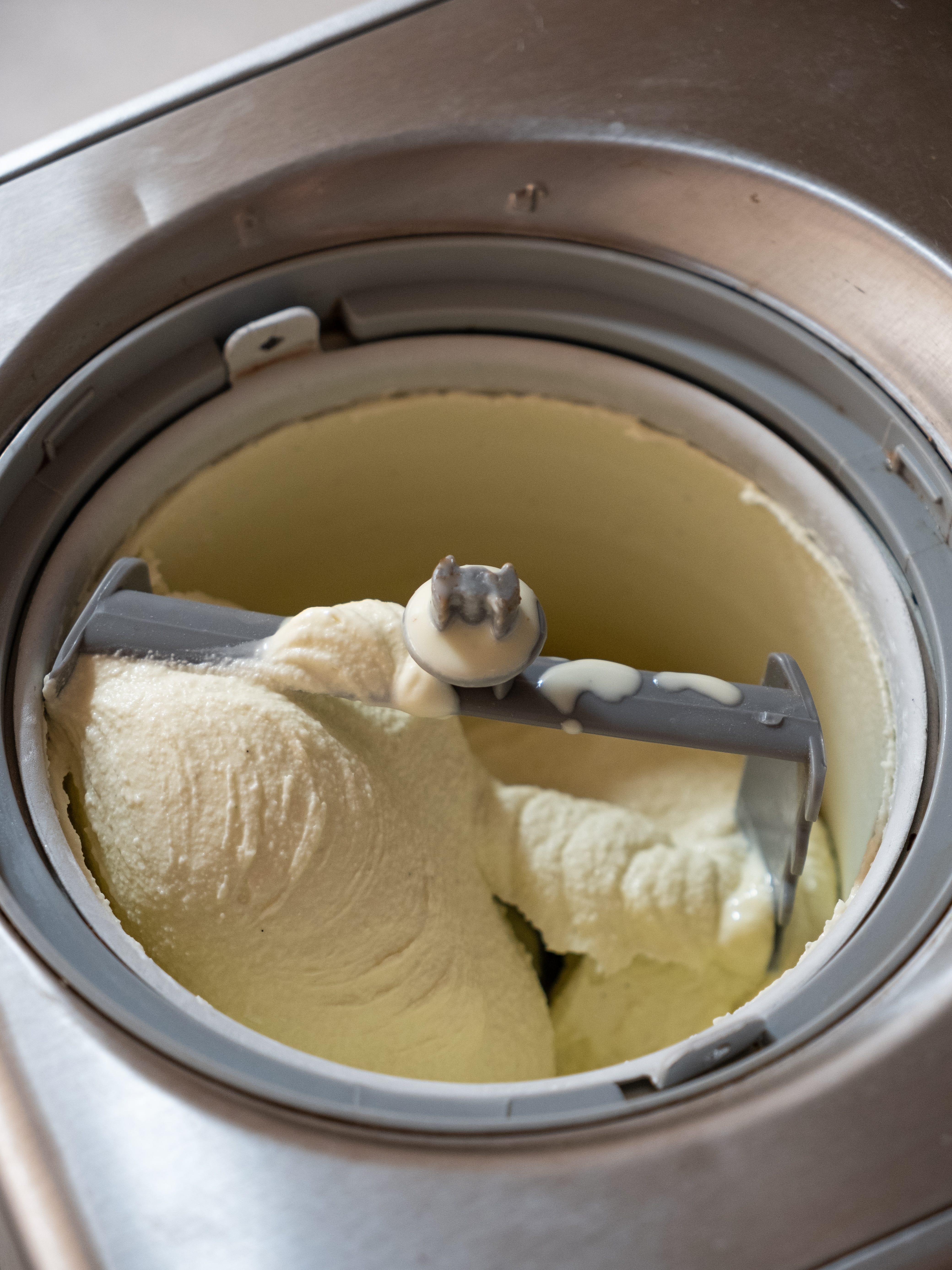
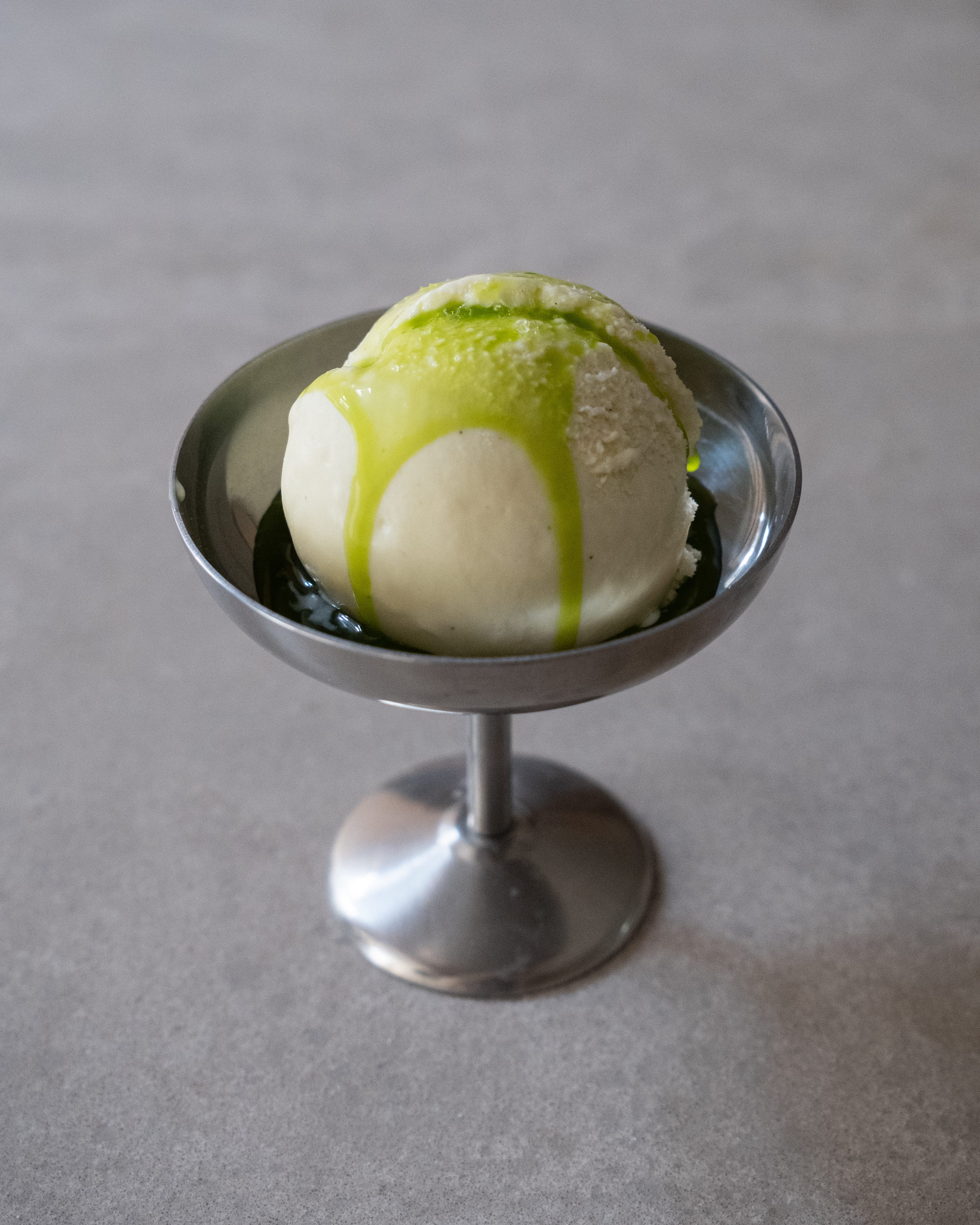
Fig Leaf Ice Cream
Quite possibly the most popular way to use the fragrant fig leaves, this ice cream is about to ruin all other flavours for you. Dairy is such a brilliant carrier of flavours that it is the perfect foil for the flavours of fig leaf.
300ml whole milk
400ml double cream
5 large fig leaves, roughly chopped
150g caster sugar
6 large egg yolks
2 tbsp vodka (optional)
To make the ice cream base, add the milk and cream to a large saucepan. Add the fig leaves and half of the sugar, stirring with a whisk to combine. Place the pan over medium/high heat and bring to a simmer. Meanwhile, add the remaining sugar and egg yolks to a large bowl and whisk together to combine. Pour the hot milk mixture over the yolk mixture, whisking as you pour to prevent the yolks from scrambling. Pour the custard back into the saucepan and cook, over low heat, stirring constantly, until the custard reaches about 80-82ºC. Pour the custard into a bowl, cover, and refrigerate overnight.
This overnight rest allows the custard to fully cool, meaning it will churn faster and result in a smoother ice cream, but it also adds a second layer of infusion. Don’t be tempted to leave this for any longer; if the infusion is left too long, bitterness can creep into the finished ice cream.
When ready to churn, pass the custard through a fine mesh sieve to remove the leaves. Churn the custard in an ice cream machine, according to the manufacturer's instructions. When the ice cream is the texture of soft serve, scrape it into a container and transfer it to the freezer. You can use tupperware for this, but I like to use a loaf pan that has been in the freezer for at least a few hours. Because the pan is metal, it will retain the chill of the freezer and will prevent the ice cream from melting too quickly as you scrape it from the machine.
Homemade ice cream is best within a couple weeks.
In Italy now, and made a fig leaf/vanilla infused panna cotta
Thank you so much for sharing Ed. I am currently rehabbing after surgery with daily walks and my daughter and I went straight out and picked some leaves from a secluded tree we know in our local park. We're about to try out the syrup recipe first. Needless to say, as a freelancer I stopped earning the moment I got sick - so having access to free content is really lovely - Thank you so much for your generosity!